Thank you to the JC for sharing this article.
When a child is diagnosed with a chronic medical condition like type 1 diabetes, Crohn’s or colitis, parents are introduced to a new world with strange vocabulary, treatment plans and hospital appointments.
But many of the practical questions only emerge once they are back home and trying to adjust everyday life around their child’s condition.
Do you think my child’s tiredness is related to the medication? Which travel insurance is best to cover pre-existing conditions? Any tips to help with my child’s constant thirst and dry mouth?
These are the questions that Camp Simcha’s Communities of Support was created to help with and the people best placed to answer them are often those who have been there before.
Camp Simcha is best known for supporting seriously ill children and their families. But its Communities of Support programme is different. Many of those on the groups have never needed the charity’s direct support services.
The programme launched in 2024 with a single group for families living with inflammatory bowel disease. Now the network is growing and thriving with seven condition-specific groups including allergies, type 1 diabetes, epilepsy, Crohn’s or colitis disease, eczema and one for parents who have birth very prematurely – bringing over 400 Jewish parents across the UK together.
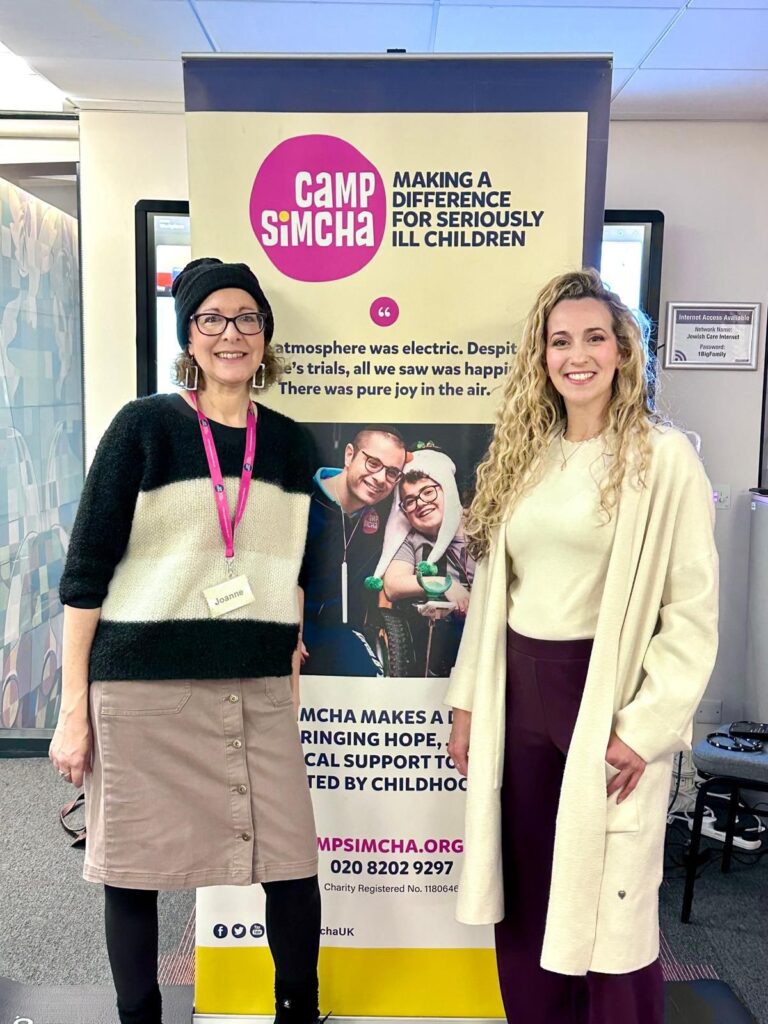
Communities of Support Family Liaison Community Manager Joanne Woolich explains:
“There’s nothing quite like hearing ‘we’ve been there’ from another parent to give some reassurance. A specialist can explain the condition, but it’s a parent who has done the school run on a sleepless night who is the one that can tell you what it’s really like and empathise.”
Each group offers talks from specialists, both online and in person. Parents hear from consultants, dietitians, nurses and other professionals – and have the chance to ask their own questions in a room (or on a screen) with people who understand why they are asking.
But the information is only half of it. Every group also has a WhatsApp community, where parents can ask the questions they would never phone a hospital about. Is this brand of snack safe? Does anyone know where we can get test strips out of hours? Any recommendations for a GP practice with expertise in type 1 diabetes?
Often an answer arrives within minutes – from someone who has already travelled the road.
One parent in the IBD group explained, “When my daughter was first diagnosed, I felt so lost. The people in the group who have gone through what I’m going through really make a difference. Friends and family just don’t understand what it’s like to have a sick child.”
This is what makes these communities so powerful. A parent whose child was diagnosed last month can sit alongside one whose child is now a teenager managing their own condition. The newcomer sees that life goes on, that routines settle and that the fear they feel today will not feel the same forever. In turn, the parent further down the journey often finds meaning in passing on knowledge – often what they wished someone had told them in the earlier days.
Peer support of this kind is practical, confidential and free of any judgement.
Alongside the talks and the WhatsApp groups, the programme runs evening get-togethers, where parents can simply meet. A recent evening for parents of children with allergies brought together families who had only known each other as names on a mobile or laptop screen.
For many, these evenings are where key friendships begin. There is reassurance sitting across from someone who doesn’t need the back story; someone who nods their head when you describe the 3am irrational thoughts and who laughs at the scenarios that only another parent in the same position would understand.
Joanne witnesses this first-hand on a weekly basis:
“From the very first meeting we can see the relief on parents’ faces. They walk in feeling isolated and they leave with answers, encouragement and sometimes, the beginning of a lasting friendship.”
Since launch, the impact of Camp Simcha’s Communities of Support has been immediate and powerful. Parents describe feeling more confident, better informed and above all, less isolated. The groups offer emotional support and encouragement, together with practical advice on specific conditions and the daily challenges that come with them.
Joanne concludes: “A diagnosis can feel overwhelming, but no parent should have to face it alone. Our Communities of Support are here so that every family can find someone who understands.”
If you or someone you know could benefit from Camp Simcha’s support or would like to find out more about Communities of Support, please email help@campsimcha.org.uk.


From time to time, we may contact you by email, phone and post to keep you updated on our work and ways you can support us. You can change the way you hear from us at any time by emailing us at office@campsimcha.org.uk or calling us on 020 8202 9297. To help us to work more efficiently, we may analyse your information to make sure you receive the most relevant communications. This may include using publicly available information. You can ask us to stop this at any time, by contacting us using the above details. You can read more about how we use your information in our privacy policy.